
A Veteran’s Story, in Their Own Words |
An Air Force veteran’s archived interview shows what can emerge when someone has time to tell a story in their own way. |
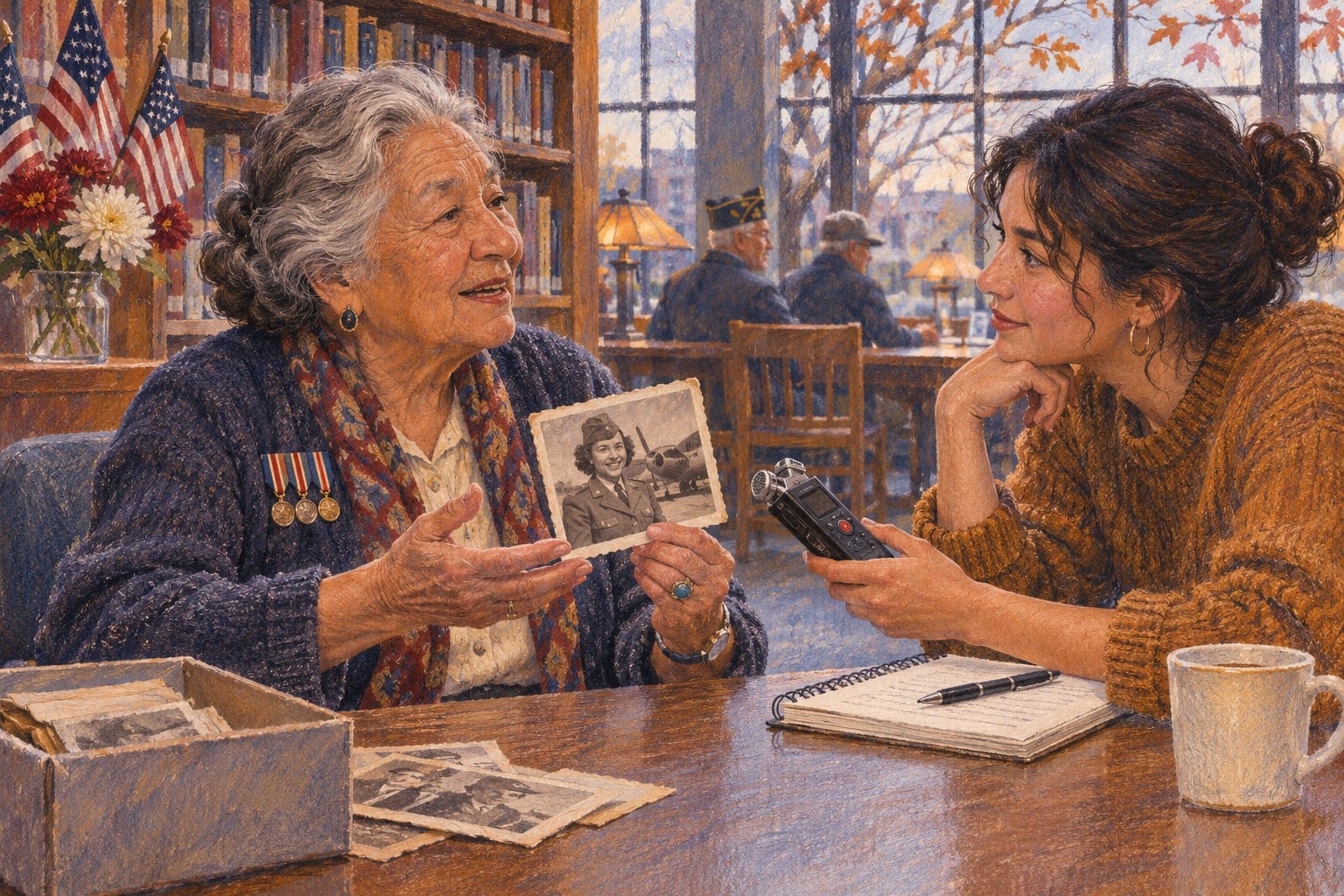
In an oral history preserved by the Library of Congress, Air Force veteran Helen Eileen Hause recalled her work with medical personnel in Vietnam and the trip home that followed. The recording holds details a service record can’t convey. This Veterans Day, you can listen to her account or ask a veteran you know if they’d like to record their own. Helen Eileen Hause oral history Every veteran carries stories that deserve to be heard. At Corona Shoutouts, we appreciate everything veterans have done for us, and few gifts honor that service more than sitting down and listening. A recorded conversation can become a family treasure, a lesson for grandchildren, and a piece of history that lasts long after the coffee cups are cleared. Who Helen Hause wasThe Library of Congress collection summarizes a remarkable career. A year after graduating from nursing school in 1955, Hause joined the Air Force for a 20-year career, much of it as a flight nurse, with service dates listed from 1956 to 1976. The collection says she logged more than 1,000 hours in Japan, flying in unpressurized planes that rarely went above 10,000 feet. After a tour of duty in England, she was assigned to Vietnam for a year, where she prepared wounded service members for evacuation on an 85-bed casualty staging flight and survived a series of mortar attacks on her air base at Tan Son Nhut. Her words about caring for those patients are unforgettable. “These kids, they would watch you when you were changing their dressings,” she said in her interview. “They would watch every movement, every expression on your face. So you just had to gear yourself not to have any expression.” In a single sentence, she captured the courage and compassion of a nurse who stayed steady for the young people in her care. Listen for the details that make a story personalThe Library of Congress collection includes audio excerpts, a transcript, and a memoir. In one excerpt, Hause describes her mixed feelings about serving in Vietnam and recalls medical personnel pitching in after a mortar attack. In another, she remembers stopping in Japan on the way home and learning that Martin Luther King Jr. had been assassinated. She also recalls changing out of her uniform at the San Francisco airport. Listen to the excerpts and explore the collection Those memories move between events readers may recognize and moments only Hause could describe. A good oral history leaves room for both. Ask who someone spent time with, what their workday looked like, and what they remember about a place they lived. If they mention a person or an object you’re curious about, follow that thread before moving to the next prepared question. Questions that open the doorThe Veterans History Project encourages interviewers to ask open-ended questions that draw on a veteran’s emotions, senses, and relationships. Its own examples are simple and warm: What was the hardest part of the military lifestyle for you to adapt to? How did you feel about the food in the field? The project also suggests practicing active listening by asking follow-up questions, and it recommends having the veteran look through old photographs during the interview to prompt memories. Library of Congress interview guidance You might add a few questions of your own. Who was your best friend in the service? What did you do on a day off? What do you want your grandchildren to know? Questions like these often lead to the stories that families treasure most. Agree on how the recording will be usedBefore you turn on a recorder, ask permission and explain who might hear the interview. A family recording, an excerpt for an article, and a submission to a public archive are different decisions. Choose a quiet place, test the audio, and let the veteran skip questions or pause whenever they want. Library of Congress interview guidance The Library of Congress puts it clearly: the veteran’s comfort always comes first. Its guidance suggests a comfortable, quiet setting, ideally the veteran’s own home or a common place like a public library or community center, and says it is perfectly fine to pause or even end an interview if the veteran is no longer comfortable. Preserve the interview if the veteran wants toIf the veteran wants to submit the interview to the Library of Congress, consult the Veterans History Project field kit before recording. The project requires at least 30 minutes for an audio or video interview and provides release forms and a recording log. If the veteran prefers to keep the conversation within the family, agree on who will keep a copy and where it will be stored. Get the Veterans History Project field kit The field kit is available as a fillable PDF and in audio and braille formats. It includes forms such as a biographical data form, a veteran’s release form, an interviewer’s release form, and logs for recordings and photographs. The project says a collection can also include original photographs, letters, and unpublished diaries or journals written during service, so an interview is not the only way to take part. The project has grown over the years, too. According to the Library of Congress, its scope expanded in 2016 to include oral histories from Gold Star Families, whose loved one died as a result of their service during a period of war. That means a family can help preserve the memory of someone who did not come home. A project the whole family can shareRecording a story is a wonderful project for grandchildren, scouts, or students. Young people can prepare the questions, run the recorder, and take notes, while the veteran decides what to share. Along the way, kids learn that history is made by real people, sometimes the very people sitting across the kitchen table. To every veteran in Corona and the surrounding communities: your stories matter, and so do you. Thank you for everything you have done for all of us. If you would like to share your story, we hope a family member or friend will sit down with you soon. For more ideas, see our guide, How to Honor Veterans on Veterans Day and All Year Long. You can also explore our Veterans Day support guide. |
0 Comments
Join the conversation
Be the first to comment
Share your thoughts above.